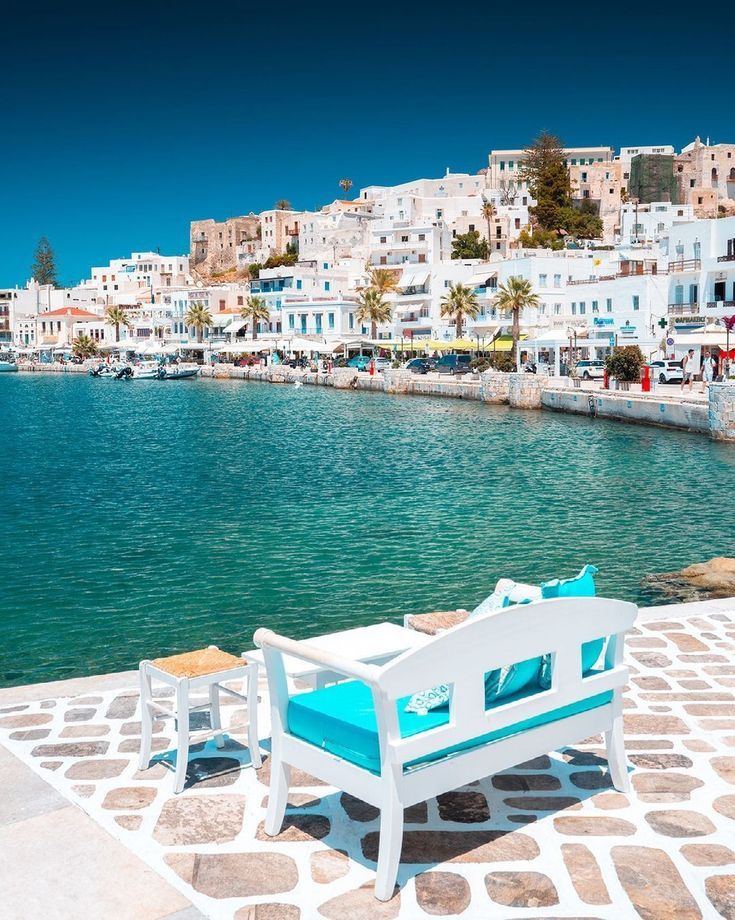
Nowhere are the virtues of authentic, low-key and space- and soul-conscious travel more evident than on the Aegean shores of Naxos. While neighboring Cycladic islands have been overrun by developed promenades, hordes of impatient tourists and inflated luxury accommodation, Naxos has managed to keep its traditional character, offering the traveler a chance to enjoy the unhurried pace of every day Cycladic life.
Approached from the sea, the island’s capital city of Chora reveals an intriguing mix of ancient castles and Venetian medieval buildings. However, a good look from the precipice of the 13th century Venetian Kastro, the castle complex built by the Genoese to withstand enemy attacks, offers a most fascinating view of the maze-like old town clinging to its slopes. Whitewashed houses reflect the warm Mediterranean sunlight while bougainvillea flowers frame heavy wooden doors. The Venetian dukes who built this walled, labyrinthine city never imagined that their work would provide modern-day explorers with mica veined stone alleyways, arcaded cloisters and enclosed patios to stumble upon. Winding your way up the fortified village, you are likely to be serenaded by a most authentic Greek melody, the sound of a classical Venetian lute music, perhaps, pouring out from a casement, drifting past carved crests of ancient family manors.
Not least of Naxos’ attractions is the island’s simple beauty and abundance of traditional products, making this island a truly special Greek island destination. Unlike many of the South Aegean islands, Naxos is blessed with exceptionally fertile land, which has been producing its bounty of fruits, vegetables, dairy and livestock products, with yields spilling generously into the traditional markets. Local specialties such as the sweet Naxian potatoes, tangy Arseniko cheese, and Kitron liqueur, a citrus flavored spirit distilled in traditional copper alembics since the 19th century, can be sampled on the island. The tradition of Naxos’ agriculture dates back to ancient times, adding to the uniqueness of each mountain village with its own local specialties and distinct character. Almost every casual taverna visit turns into a true Greek culinary experience with its emphasis on fresh tasting food. For example, enjoy locally grown, slow-roasted lamb, fragrant with wild oregano, handmade pasta and fresh cheeses, and crusty bread dipped into olive oil, accompany your meal with a glass of the local wine. In addition, the unspoiled nature of the island contributes to a memorable family-oriented atmosphere, as locals eagerly share their time and good food with you – the visitor. It is not uncommon to be joined at the taverna table by the local owner who shares his wine and spoon sweet specialties made of wild figs with you, telling you about his family and ancestors.
Naxos has an equally rich, if less-known coastline that is ideal for seeking out more traditional Greek island experiences. Miles of secluded sandy beaches fringe the western shores of Naxos, offering the visitor a good opportunity to unwind on the beach at sunset or enjoy an evening bar-b-que. Undiscovered sandy beaches of Plaka and Agios Prokopios are still relatively free of crowds and offer easy access to the sea with its warm, clear waters and gently rolling dunes. Spend a quiet afternoon enjoying the sunshine or cool off on a summer night with a kitesurfing adventure at Mikri Vigla. Nestled in the embrace of the Naxian countryside, the inhabitants of Naxos have long enjoyed the benefits of the island’s unspoiled nature as a means to escape the hustle and bustle of modern life.
In this respect, the island village of Apiranthos is a most interesting place to visit. Attached to the end of Chora by a narrow isthmus, the small island of Palatia is best known for the impressive view over the bay with the 2,500 year old marble doorway of the Portara, the unfinished temple to Apollo, looming large above the harbor. As the sun goes down over Naxos, locals and visitors alike gather on the rocky crest to watch the sky blush pink and gold blend into the dark blue of the Aegean Sea, with the golden glow filtering through the great marble porticoes. Statuesque unfinished kouroi – marble figures of gods or heroes – lie dormant in the excavated ruins of Apollonas, carved in the 7th century BC, surrounded by an excavated frieze depicting acanthus leaves that once adorned the ancient temple.
Set in the wild slopes of Mount Zeus, the village of Apiranthos boasts picturesque stone cottages, their white marble facades glowing in the setting sun. Local women continue their age old tradition of hand weaving beautiful woolen costumes, while local men congregate at the stone floored cafes, sipping strong Greek coffee and chatting in a mixture of the local Greek dialect and ancient Cretan Greek. Fragrant herbs add their spicy touch to the evening air, providing a most welcome coolness to the village inhabitants, who venture up the mountain slopes for their daily walk.
In many ways, the magic of a Naxian holiday is found in the combination of its diverse attractions. In particular, hiking up the rocky path to the top of Mount Zeus, the highest peak in the Cyclades, offers the most rewarding view over the entire island. Cool mountain springs and caves dot the hiking trail, which follows local legend that the Zeus of the Olympian gods was raised on these very slopes. Classical mythology blends into the landscape of Naxos as the scenery takes on unique forms, reminiscent of the classical period.
As the sun sets over the horizon, transforming the island’s coastal tavernas into glowing beacons, the white washed buildings of Chora are hugged by the warm sea air, drifting past the aroma of freshly prepared Greek specialties and the sound of traditional music filling the evening air. Local fishing boats are moored in the marina for the night as their owners prepare to set sail again in the morning, following the daily rhythm of coastal life. Unlike other Cycladic towns geared towards satisfying the demands of the international tourist, Naxos has remained true to its time-honored character, offering visitors a chance to experience the real Greek island tradition. As the international jet-setters explore other Cycladic islands, the locals of Naxos go about their business in a most unperturbed manner, welcoming the occasional foreign visitor with genuine Greek hospitality.
By combining the varied attractions of Naxos, from its relatively undiscovered sandy beaches to local flavors of traditional Greek cuisine, and a fascinating array of Venetian and ancient history, this beautiful Aegean island offers the visitor a unique insight into the new age Greek island getaway that is all about authenticity, charm and character.
